Science Shiksha Samvad
3-Year Capacity Building Program for Government Science Teachers
Program Overview
Implementing Organization
Vidyoday Muktangan Parivar Foundation
Target Group
Government Science Teachers (Grades 6–10)
Duration
3 Years
Format
Monthly Samvad + Quarterly Workshops + Classroom Support
Program Vision
To empower government science teachers to become confident, concept-clear, activity-oriented, and student-centric educators who can deliver joyful, inquiry-based science learning aligned with NEP 2020.
Core Objectives
Strengthen conceptual understanding of science teachers
Shift pedagogy from rote learning to experiential learning
Build teachers' confidence in hands-on experiments using low-cost materials
Develop scientific questioning, observation, and reasoning skills
Create a community of reflective science teachers
Improve student learning outcomes and interest in science
Program Structure (3 Layers)
Monthly Science Shiksha Samvad
2–3 hours
- Concept discussions
- Classroom challenges sharing
- Experiment demonstrations
- Reflection & peer learning
Quarterly Hands-on Workshops
1 Full Day
- Deep concept exploration
- Activity & experiment design
- Assessment tools & worksheets
- Lab utilization & safety
Classroom Support & Mentoring
Ongoing
- Classroom observation (selected teachers)
- Co-teaching / demo sessions
- Individual mentoring & feedback
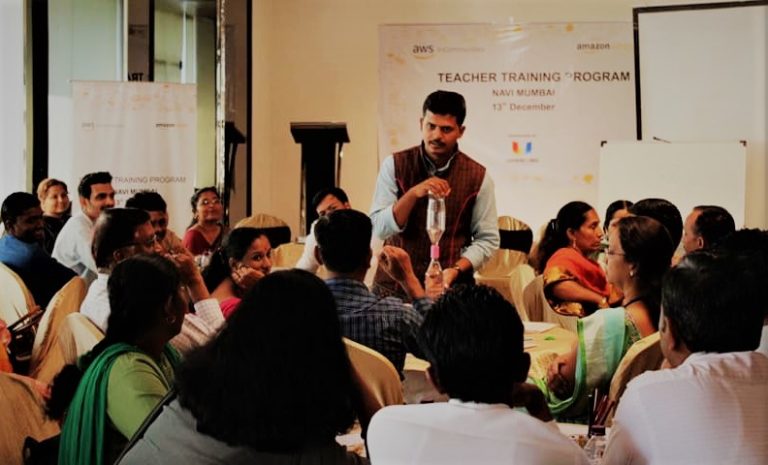
3-Year Journey
Foundation & Confidence Building
"From Fear to Clarity"
Key Focus Areas
- Concept clarity (Physics, Chemistry, Biology – middle school)
- Scientific temper & curiosity
- Low-cost & no-cost experiments
- Understanding student misconceptions
Monthly Samvad Topics (Indicative)
Outputs – Year 1
Pedagogy, Practice & Assessment
"From Teaching to Learning"
Key Focus Areas
- Constructivist & experiential pedagogy
- Lesson planning aligned with NEP 2020
- Assessment for learning (AFL)
- Lab strengthening & student projects
Advanced Samvad Topics
Outputs – Year 2
Leadership, Innovation & Sustainability
"Teachers as Science Leaders"
Key Focus Areas
- Teacher leadership & mentoring
- STEM integration
- Innovation & tinkering
- Sustainability of science culture in schools
Leadership Samvad Topics
Outputs – Year 3
Monitoring & Evaluation
Pre–Post teacher assessment
Classroom observation rubrics
Student feedback
Teacher reflection journals
Annual impact report
Expected Long-Term Impact
Confident Science Teachers
Empowered educators delivering quality science education
Improved Learning Outcomes
Enhanced student understanding and academic performance
Reduced Science Fear
Decreased dropout rates and increased science interest
Strong Science Culture
Sustainable practices in government schools
NEP 2020 Alignment
Pedagogy aligned with national education policy
Voices from the Field
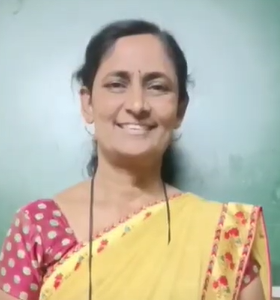
"After Shiksha Samvad, I stopped relying solely on textbooks. I now teach through simple, hands-on experiments and ask my students to explore scientific solutions to real-life problems in our village."
"I built a flood indicator to help my village stay safe during heavy rains! Before this, I never thought I could do something like this with science."
- Ishan
Class 7, Kumar Vidya Mandir, Shiradwad
Support Teacher Empowerment
Help us expand this transformative 3-year program to more schools and empower more teachers.